
> Cuba > Santiago de Cuba
Overview
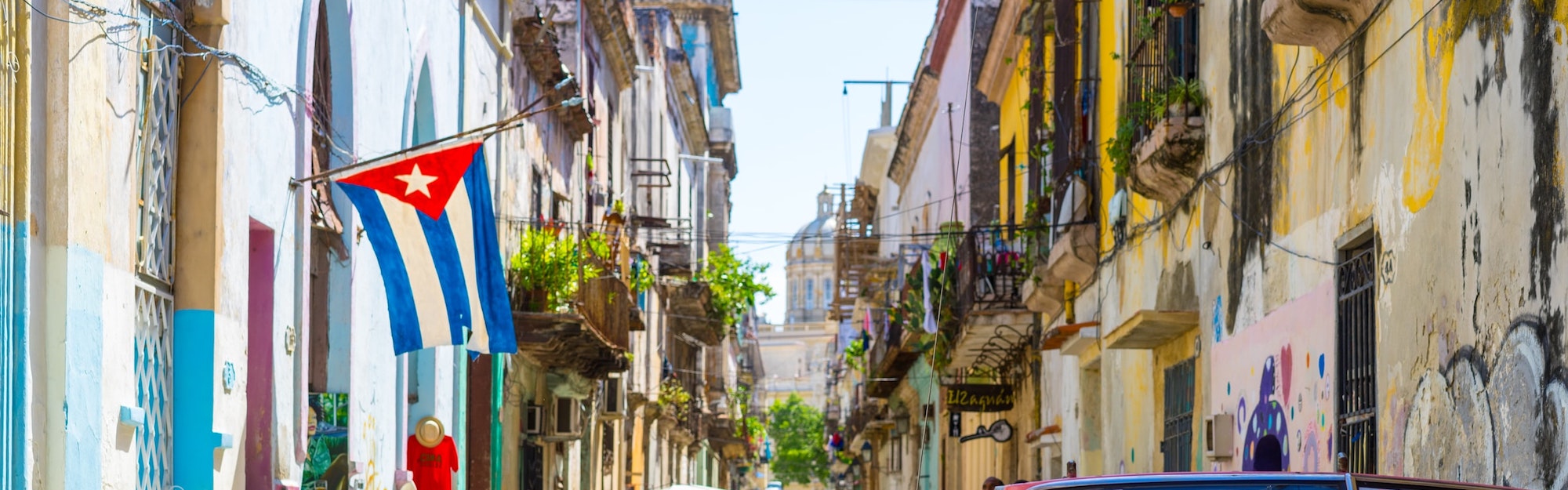
The original capital of Cuba, Santiago was founded in 1514 and is today the centre of the province of Santiago de Cuba in the southeast of the island, 485 miles (780km) from the present capital city of Havana. One of the most picturesque cities in Cuba, it's notoriously hilly with sloping streets, nestled between the coast and the Sierra Maestra mountain range.
Santiago boasts a number of monuments and museums associated with Cuba's long struggle for national independence. The city also claims the oldest home in the Americas: Casa de Diego Velazquez, the residence of the Spanish governor of old, which is a highlight of the city's historic quarter. Santiago is a diverse city, with many population groups, often in quite distinct neighbourhoods, including the French-Haitian district of Tivoli.
The city is known for its annual carnival, both bigger and more riotous than Havana's. It's also blessed with closely situated natural wonders, including the 80,000 hectare (197,684 acre) Baconao Park, which begins in the city and ends in the lagoon of the same name.
Climate
Cuba has a tropical, temperate climate and experiences two distinct seasons: a rainy season from May to October, and a dry season from November to April. Generally the weather in Cuba is sunny, hot and humid. Santiago de Cuba's climate is fairly representative of the rest of Cuba, although it is situated in the most humid area of the country. Average daytime temperatures in Santiago range from 84F (29C) in January to 100F (38C) in August. From May through August, high humidity can make the heat uncomfortable. Rainy weather can occur in any season in Santiago but in the cooler winter months around December there are only light showers. The rainy season includes a hurricane season from July to November, and Santiago suffers quite badly from these tropical storms as it is on the south coast. September and October are the months most likely to experience serious tropical storms.
Ultimately, Santiago de Cuba's climate is hot all year round with pleasant, sunny weather prevailing. The dry season is the best time of year to visit Santiago, with December and January being the most popular months, but a number of people brave the summer heat to enjoy the Santiago Carnival in July.
| Jan | Feb | Mar | Apr | May | Jun | Jul | Aug | Sep | Oct | Nov | Dec | |
|---|---|---|---|---|---|---|---|---|---|---|---|---|
| Rain (cm) | 73.7 | 43.2 | 53.3 | 58.4 | 139.7 | 101.6 | 68.6 | 94 | 106.7 | 193 | 94 | 81.3 |
| Rain (inches) | 2.90 | 1.70 | 2.10 | 2.30 | 5.50 | 4.00 | 2.70 | 3.70 | 4.20 | 7.60 | 3.70 | 3.20 |
| Average Temperature (°C) | 24.5 | 24.5 | 25 | 25.5 | 26 | 27 | 28 | 28 | 27.5 | 27 | 26.5 | 25 |
| Min Temperature (°C) | 21 | 21 | 22 | 23 | 23 | 24 | 25 | 25 | 24 | 24 | 23 | 22 |
| Max Temperature (°C) | 28 | 28 | 28 | 28 | 29 | 30 | 31 | 31 | 31 | 30 | 30 | 28 |
| Average Temperature (°F) | 76 | 76 | 76.5 | 78 | 79 | 81 | 82 | 82 | 81.5 | 80.5 | 79.5 | 77 |
| Min Temperature (°F) | 70 | 70 | 71 | 73 | 74 | 76 | 77 | 77 | 76 | 75 | 73 | 71 |
| Max Temperature (°F) | 82 | 82 | 82 | 83 | 84 | 86 | 87 | 87 | 87 | 86 | 86 | 83 |
Sightseeing
Sightseeing
There is a wonderful variety of things to see and do in Santiago de Cuba, but it's particularly exciting for history buffs, especially those interested in its military and revolutionary past. The Castillo de San Pedro Del Morro (Morro Castle) is an astounding ancient fortress; it is difficult not to imagine battles with fearsome pirates when strolling along the battlements.
There are other worthwhile historical attractions in Santiago, such as the famous Moncada Barracks where Castro's revolution officially began, Santiago's Plaza de la Revolucion and its impressive monuments, and the Santa Ifigenia Cemetery, which houses the graves of many important Cuban figures such as Jose Martí, Fidel Castro and Carlos Manuel de Cespedes.
There are also a number of museums worth visiting in Santiago. The Diego Velazquez Museum, possibly the oldest house in Cuba, gives remarkable insight into colonial domestic life and the history of the city; and the Bacardi Museum offers a glimpse into the private collection of one of the most famous families of Santiago. The imposing Metropolitan Cathedral in the centre of town is also definitely worth exploring.
The cultural and historical attractions of Santiago are matched by the natural surroundings of the city, drawing tourists from far and wide. The vast Baconao Park has plenty of natural splendour as well as many historical and cultural sites. Travellers making an excursion a little further afield will come across the Parque Nacional Alejandro de Humboldt, an awe-inspiring wilderness and UNESCO World Heritage Site widely hailed as the most valuable and biodiverse park in the Caribbean.
Santiago de Cuba is a treasure trove for tourists and the fact that it is still slightly less crowded and commercial than Havana adds to its charm.